
The Hidden Cost of Poor Leadership


✨ The Hidden Cost of Poor Leadership
What Doesn't Show Up on the Balance Sheet
Poor leadership costs organizations more than productivity and profit. Sometimes, the greatest costs are the ones we don't see until it's too late.
What Does Poor Leadership Really Cost?
When we talk about the cost of poor leadership, it's easy to think about the numbers.
Lost productivity.
Employee turnover.
Missed deadlines.
Customer complaints.
Lower revenue.
Those costs are real, and they're important.
But after more than 20 years in business and many years working with leaders and teams, I've learned that some of the most significant costs of leadership don't show up neatly on a financial statement.
They show up in people.
They show up when someone stops speaking up.
When a good employee has an idea but decides it's not worth sharing.
When someone has a concern but doesn't feel comfortable bringing it forward.
When a team member stops asking questions because they've learned that challenging the status quo isn't welcome.
And sometimes, it looks like someone who is still showing up every day, but has quietly stopped giving their best.
That's the hidden cost of poor leadership. 🎯✨
🌟 Information Doesn't Create Transformation
We live in a world overflowing with information.
Books.
Podcasts.
Webinars.
Courses.
Conferences.
Leadership quotes appear in our social media feeds every day.
The challenge isn't finding more information.
The challenge is turning information into action.
Leadership isn't measured by what we know.
It's measured by what the people around us experience because of how we lead.
That means leadership isn't something we collect.
It's something we practise.

1. When People Stop Speaking Up, Leaders Stop Hearing What Matters
Think about the people closest to the work in your organization.
They often see things leadership doesn't.
They notice the frustrated customer.
They see where a process isn't working.
They hear the concerns of their coworkers.
They spot opportunities.
They know where time is being wasted.
They may even see a problem long before it becomes a problem on a report.
But what happens when people don't feel comfortable speaking up?
They stop.
And when people stop sharing what they see, leaders lose access to some of the most valuable information in the organization.
Sometimes silence isn't agreement.
Sometimes silence is a leadership warning sign.
👓 The Leadership Lens
Are your people comfortable telling you something you may not want to hear?
2. Disengagement Doesn't Always Look Like Someone Leaving
When we hear the word disengaged, we might picture someone who is clearly unhappy or looking for another job.
But disengagement isn't always obvious.
Sometimes the person stays.
They attend the meetings.
They complete their responsibilities.
They meet expectations.
But something has changed.
They no longer bring the same ideas.
They don't volunteer.
They stop looking for ways to improve things.
They do what's required, and nothing more.
They're physically present, but their contribution has quietly stepped back.
That can be one of the hardest leadership costs to recognize because everything can look fine from the outside.
3. Trust Can Disappear One Small Moment at a Time
Trust is rarely lost because of one dramatic event.
More often, it's the accumulation of small moments.
A leader says they'll follow up, but doesn't.
A concern is raised and never addressed.
A decision changes without explanation.
Someone makes a mistake and is made to feel foolish for it.
Communication becomes inconsistent.
People aren't sure what to expect.
Eventually, employees begin protecting themselves.
They share less.
They take fewer risks.
They stop asking questions.
And instead of spending their energy contributing to the organization, they start spending it figuring out how to navigate the leader.
That's a costly place for any team to be.

4. Poor Leadership Can Limit People's Growth
One of the responsibilities I believe leaders have is to help people become more capable than they were when they started.
But development can easily get pushed aside when leaders are constantly dealing with today's problems.
The deadline comes first.
The customer comes first.
The urgent issue comes first.
The next meeting comes first.
And development?
"We'll get to that when things slow down."
The problem is that things rarely slow down on their own.
If people aren't given opportunities to learn, stretch, make decisions and grow, the organization can eventually find itself with a talent problem it helped create.
You can't build tomorrow's leaders if you're only managing today's workload.
5. When Everything Comes Back to the Leader
Here's another hidden cost.
If people don't have the confidence, clarity or authority to make decisions, everything comes back to the leader.
Can you approve this?
What should I do?
Should we handle it this way?
Can you talk to the customer?
Can you make this decision?
Before long, the leader becomes the answer to everything.
That might feel like being needed.
But it's not sustainable.
Strong leadership isn't about creating a team that can't function without you.
It's about developing people who can think, decide and contribute without needing you for every answer.
When you develop people, you don't make yourself less valuable.
You make the whole organization stronger.

So, What Does Good Leadership Look Like?
Good leadership doesn't mean getting everything right.
None of us do.
It means being willing to look at how our leadership is experienced by the people around us.
It means creating an environment where people can:
Speak — without fear of being dismissed.
Grow — because development is part of the work.
Contribute — because their ideas and experiences matter.
Take ownership — because trust includes giving people room to lead.
Connect — because strong relationships make stronger teams.
And sometimes, it means being willing to ask ourselves an uncomfortable question:
“What might I be doing that is making it harder for my people to do their best work?”
That's not a question of blame.
It's a question of self-awareness.
And self-awareness is where meaningful leadership growth begins.
Leadership Starts With Looking Within
It's easy to look at a struggling team and ask:
Why aren't they communicating?
Why aren't they taking ownership?
Why aren't they engaged?
Why aren't they growing?
But perhaps the more powerful leadership questions are:
Have I created an environment where communication is safe?
Have I given them enough clarity to take ownership?
Am I creating opportunities for them to grow?
Do they trust me enough to tell me what I need to hear?
Because leadership isn't only about what we ask of others.
It's also about what we model, create and invite through our own behaviour.
That is why I believe leadership development has to begin within.
Before we can lead others differently, sometimes we have to be willing to look at ourselves differently.
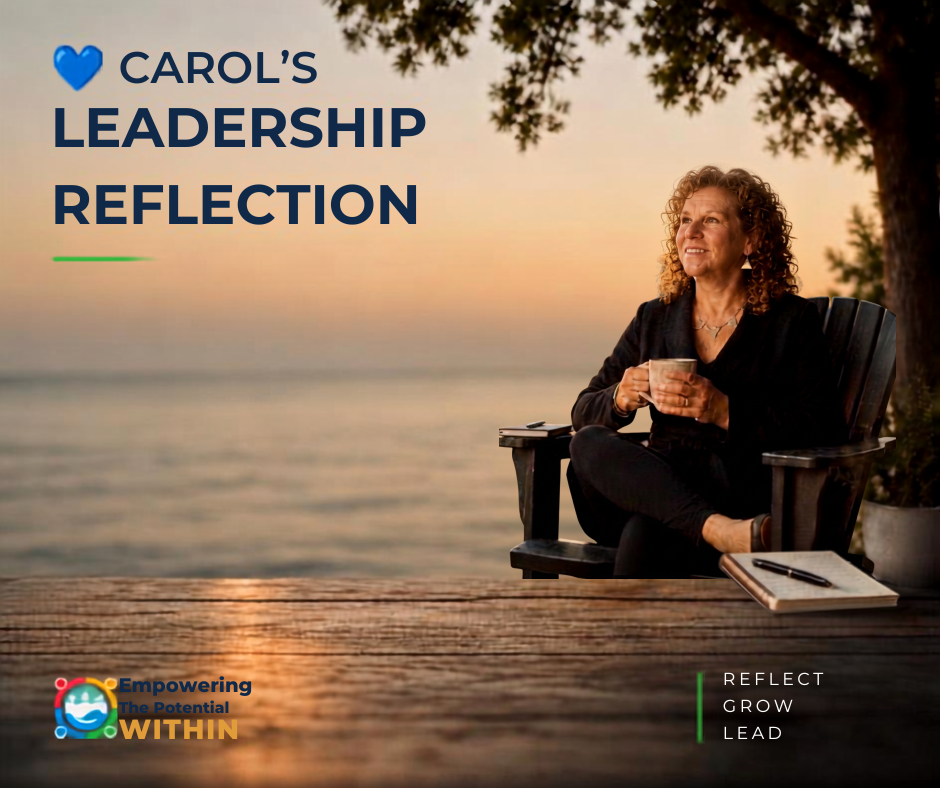
💙Carol's Leadership Reflection
A question to help you grow this week.
If your team could give you one completely honest piece of feedback about your leadership, what do you think they would say?
Don't rush to defend yourself.
Don't decide whether they're right or wrong.
Just listen.
Because sometimes the feedback we least want to hear contains the greatest opportunity for growth.
Reflect. Grow. Lead.
🚀 The Hidden Cost May Also Be Your Biggest Opportunity
Poor leadership doesn't have to define a team or an organization.
Leadership can change.
People can grow.
Trust can be rebuilt.
Communication can improve.
And leaders can become more intentional about the environment they create.
The first step isn't becoming a perfect leader.
It's becoming a more self-aware one.
So perhaps the real question isn't:
“Am I a good leader?”
Maybe it's:
“What experience are people having because of the way I lead?”
That's a question worth reflecting on.
And it might just be one of the most valuable leadership questions you ask this year.
How Is Your Leadership Being Experienced?
Take our free 5-Minute Leadership Self-Check and identify where you may have opportunities to strengthen communication, trust, growth and ownership.
About Empowering The Potential Within
At Empowering The Potential Within, I believe leadership development isn't about putting people in a box or giving them another set of instructions to follow. It's about helping individuals and organizations understand themselves, strengthen relationships, communicate more effectively and intentionally develop their potential.
"Because when people grow, teams grow. And when teams grow,
organizations and communities become stronger."
Explore all upcoming events on our website → https://www.empoweringthepotentialwithin.com/event-workshop
Not sure what your next move should be? Unclear on how to move forward with your goals? Struggling to be seen, heard and understood? Let's chat to strategize your next steps.
Book a session here:
Feel free to share your thoughts by leaving a comment!

Are you feeling unheard, not valued and not part of the team?
Has your team lost their engagement?
Do you feel like you have lost your passion and purpose?
Click the button below to book a complimentary connection call with Carol. Let's discuss your next steps and whether we are a good fit to work together. If not, no hard feelings, and you'll walk away with some insight.
📩 Email me directly or visit empoweringthepotentialwithin.com to learn more.


Comments